
Mind Your Language: The UK’s New 2026 English Requirements
If you’re planning to make the move to the UK this year, you might want to brush up on your "please" and "thank yous"—and quite a bit more.
IELTS
Adriana Silva
2/15/20263 min read
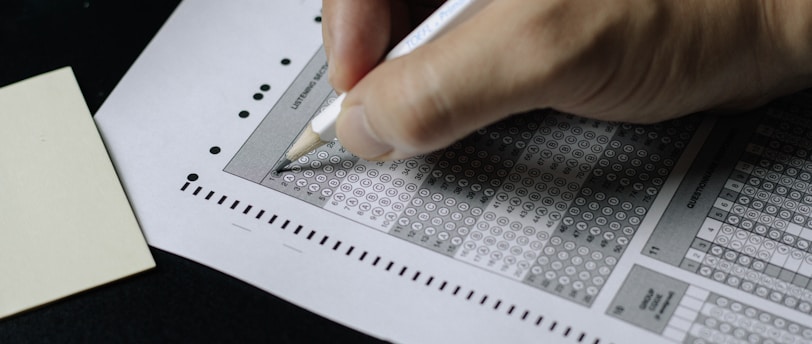

As of 8 January 2026, the Home Office has officially upped the ante for English language requirements.
It’s no longer enough to just "get by"; for many, the bar has moved from a basic chat to a proper professional standard. Here’s the lowdown on what’s changed and whether you need to worry.
▶️ The Big Step Up: B1 to B2
For years, the standard for most work visas was B1 (Intermediate). In layman's terms, that’s about the level of a GCSE. But for 2026, the government has bumped this up to B2 (Upper-Intermediate) for several key routes.
Who does this affect? If you are a first-time applicant for the following visas, the B2 requirement now applies to you:
Skilled Worker Visa
Scale-up Worker Visa
High Potential Individual (HPI) Visa
What is B2 level? Think of it as "vantage" or "independent" proficiency. You need to be able to understand complex technical discussions in your field and speak with enough fluency that you aren't leaving native speakers scratching their heads.
▶️ Key Exceptions: Are You Exempt?
Don't lose your marbles just yet—not everyone has to sit a new exam. You generally won’t need to prove your English level if:
You’re from a majority English-speaking country (e.g., USA, Australia, Canada, or certain Caribbean nations).
You have a degree taught in English that is recognised by Ecctis (formerly UK NARIC).
You’re already here: If you’re already on a Skilled Worker visa and met the B1 requirement previously, you can typically extend your stay or apply for settlement (ILR) based on that original level.
▶️ How to Prove It
If you do need to take a test, it must be a Secure English Language Test (SELT) from an approved provider like IELTS, Pearson (PTE), or Trinity College London. You’ll be tested on the "big four":
Reading
Writing
Listening
Speaking
To hit that B2 mark on an IELTS for UKVI test, you’re looking at a minimum score of 5.5 in every single category.
▶️ Looking Ahead: The "Earned Settlement" Rumours
There’s a bit of chatter about further changes coming in April 2026. The government is consulting on "earned settlement," which might see the residency requirement for Indefinite Leave to Remain (ILR) increase, though higher English levels (like C1) could potentially act as a "fast-track" factor.
The 2026 B2 English Mastery Checklist
1. Listening: Catching the Nuance
At B2, you aren't just listening for keywords; you need to understand the speaker’s intent.
Complex Arguments: Can you follow a presentation or technical talk in your specific professional field?
Standard Accents: Can you understand most radio news and TV programmes without subtitles?
Abstract Topics: Can you identify the speaker's mood or attitude, even if they don't state it explicitly?
2. Speaking: Fluency and Spontaneity.
The biggest difference at B2 is "interactional ease." You shouldn't be a "burden" on the person you're talking to.
Sustain an Argument: Can you explain a viewpoint on a topical issue, giving the pros and cons of various options?
Native Interaction: Can you have a back-and-forth conversation with a local without either of you getting a headache?
Active Participation: Can you jump into a discussion at work, account for your opinions, and sustain them under pressure?
3. Reading: Beyond the Surface
B2 reading involves tackling long, complex texts where the information might be "implied" rather than spelled out.
Articles & Reports: Can you understand contemporary literary prose and articles concerned with contemporary problems?
Technical Text: Can you grasp the meaning of specialized articles even if they are outside your immediate area of expertise?
Inference: Can you "read between the lines" to understand a writer’s specific bias or perspective?
4. Writing: Structure and Detail
Your writing needs to be clear, well-organised, and follow the conventions of the task (e.g., a formal report vs. an informal email).
Detailed Compositions: Can you write clear, detailed text on a wide range of subjects related to your interests?
Essays & Reports: Can you write an essay or report, passing on information or giving reasons in support of or against a particular point of view?
Highlighting Significance: Can you write letters that highlight the personal significance of events and experiences to you?
The Bottom Line: If you're applying for a work visa this year, double-check your level. A B1 certificate in a B2 world is a one-way ticket to a visa refusal.
Don’t leave your future in the UK to chance. Get in touch with the team to book an assessment or join a class:
Call / WhatsApp: +44 (0) 7797 913 106
Email: jo@lingolanguage.co.uk
Sort your English now, and you can focus on the important stuff—like figuring out how to make a proper cuppa. ☕️
Lingo Language Learning
Tailored English lessons for diverse learners.
Phone / WhatsApp
+44 0 7797 913 106
© 2025. All rights reserved.
Powered by CREADORA
Follow our work
www.lingolanguage.co.uk


Contact Us
Start your language learning journey today!